
Preparing for a Move into a Care Home: A Reassuring Step-by-Step Guide
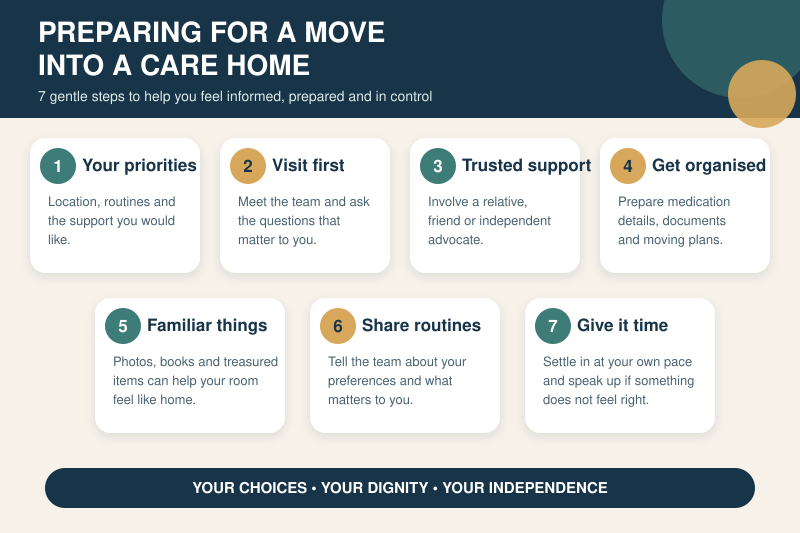
This guide explains some practical and emotional steps that can make the move feel more manageable.
1. Begin with what matters to you
Before looking at practical arrangements, take some time to think about what you want from your new home. Your preferences should be at the centre of the decision.
You may want to consider:
-
How close you would like to be to family, friends or your local community
-
Whether you prefer a lively environment or somewhere quieter
-
The routines, hobbies and interests you would like to continue
-
Any cultural, spiritual or dietary needs that are important to you
-
What would make your bedroom feel comfortable and familiar
-
How much help you would like with everyday tasks
Writing down your priorities can help you compare different homes and ask the questions that matter most to you.
2. Visit the care home before moving in
If possible, visit the care home before making your final decision. A brochure or website can provide useful information, but spending time in the home will give you a better sense of the atmosphere.
During your visit, notice how staff speak with residents and whether people appear comfortable and included. Ask to see the bedrooms, dining areas, gardens and shared spaces. You may also want to look at menus and activity plans.
Do not be afraid to ask detailed questions. A good care home team will understand that choosing where to live is an important decision and should be happy to explain how the home operates.
If the home offers a trial visit, lunch or short stay, this may help you become familiar with the setting before moving permanently.
3. Involve people you trust
Talking with family members, friends or an independent advocate can make the process feel less overwhelming. They can help you attend visits, make notes and organise practical arrangements.
However, this is your move and your voice matters. Be honest about what you want, what worries you and what would help you feel more confident. The people supporting you should listen to your views and help you make an informed choice.
4. Organise the practical details
Once you have chosen a home and agreed on a moving date, ask the care team for a checklist of anything they need from you. This may include information about your health, medication, GP, daily routines, emergency contacts and support needs.
You may also need to arrange:
-
Copies of important personal and financial documents
-
A current list of medicines and relevant health information
-
Changes of address for banks, pensions and other services
-
The cancellation or transfer of household utilities and subscriptions
-
Transport for moving day
-
Insurance or labelling for valuable personal belongings
Only share sensitive personal or financial information through an agreed and secure process. If you are unsure what is required, ask the care home or someone you trust for help.
5. Make your new room feel like home
Familiar belongings can make a new room feel more personal from the beginning. Depending on the space available and the home's safety guidance, you might bring:
-
Family photographs and framed pictures
-
A favourite blanket, cushion or bedspread
-
Books, music, ornaments or treasured keepsakes
-
A familiar chair or small item of furniture
-
Comfortable clothes and footwear
-
Items connected to your hobbies or interests
Ask what furniture and electrical items are already provided before packing. It is also worth checking which belongings need to be labelled or safety tested.
You do not have to arrange everything on the first day. Bringing a few important items initially and adding others later can make the process easier.
6. Tell the team about your routines and preferences
Good care is about more than meeting practical needs. It should reflect who you are as an individual.
Tell the care team about the routines that make you feel comfortable. Perhaps you enjoy an early morning cup of tea, prefer a later breakfast, like to watch a particular television programme or need quiet time in the afternoon. Share your favourite foods, hobbies, music and topics of conversation, as well as anything you dislike.
These details help staff get to know you and support you in a way that feels personal rather than unfamiliar.
7. Plan for moving day
Moving day can be tiring, so keeping the arrangements simple may help. Ask what time the home recommends arriving and what will happen when you get there.
You may wish to have a relative or friend accompany you, help arrange your room and stay for a meal or a cup of tea. A member of staff should show you around, introduce you to key people and explain what to expect during your first few days.
Pack essential items—including medication, documents, comfortable clothing, toiletries and anything you will want immediately—in a clearly marked bag that is easy to reach.
8. Give yourself time to settle in
Even when you have chosen the right home, it may take time for it to feel familiar. New faces, routines and surroundings can be a lot to take in. Feeling unsettled or emotional at first does not necessarily mean that you have made the wrong decision.
Try to take each day at your own pace. You might begin by sharing a meal with other residents, joining a small activity or spending time in a communal area. If you would rather have some quiet time, let the team know.
Speak up if something is worrying you or if an aspect of your care does not feel right. Staff can only address a concern when they know about it, and you should feel comfortable asking questions or requesting changes.
9. Keep the connections that matter
Moving into a care home should not mean losing contact with the people and communities that are important to you.
Before moving, find out about visiting arrangements, telephone and internet access, trips into the community and support for attending local groups or places of worship. Arrange regular calls or visits with family and friends if that feels helpful.
Continuing familiar relationships and interests can provide reassurance while you build new connections within the home.
Useful questions to ask before your move
-
Who will be my main point of contact?
-
How will my care and preferences be reviewed?
-
Can I choose when I get up, go to bed and have meals?
-
What activities and outings are available?
-
How do visits from family and friends work?
-
Can I continue seeing my current GP, dentist or other professionals?
-
What is included in the weekly fee, and are there additional charges?
-
How can I raise a concern or make a complaint?
-
What should I bring, and what is already provided?
-
What support is available during the settling-in period?
A new chapter with the right support
Preparing carefully can make moving into a care home feel less daunting. Take time to understand your options, ask questions and share what is important to you. Most importantly, remember that you deserve to be treated with dignity, listened to and supported to make your own choices.